Chargeback-Proof: How Developers Can Defend Their Work and Get Paid
Real steps to track your work, own your IP, and fight chargebacks like a pro
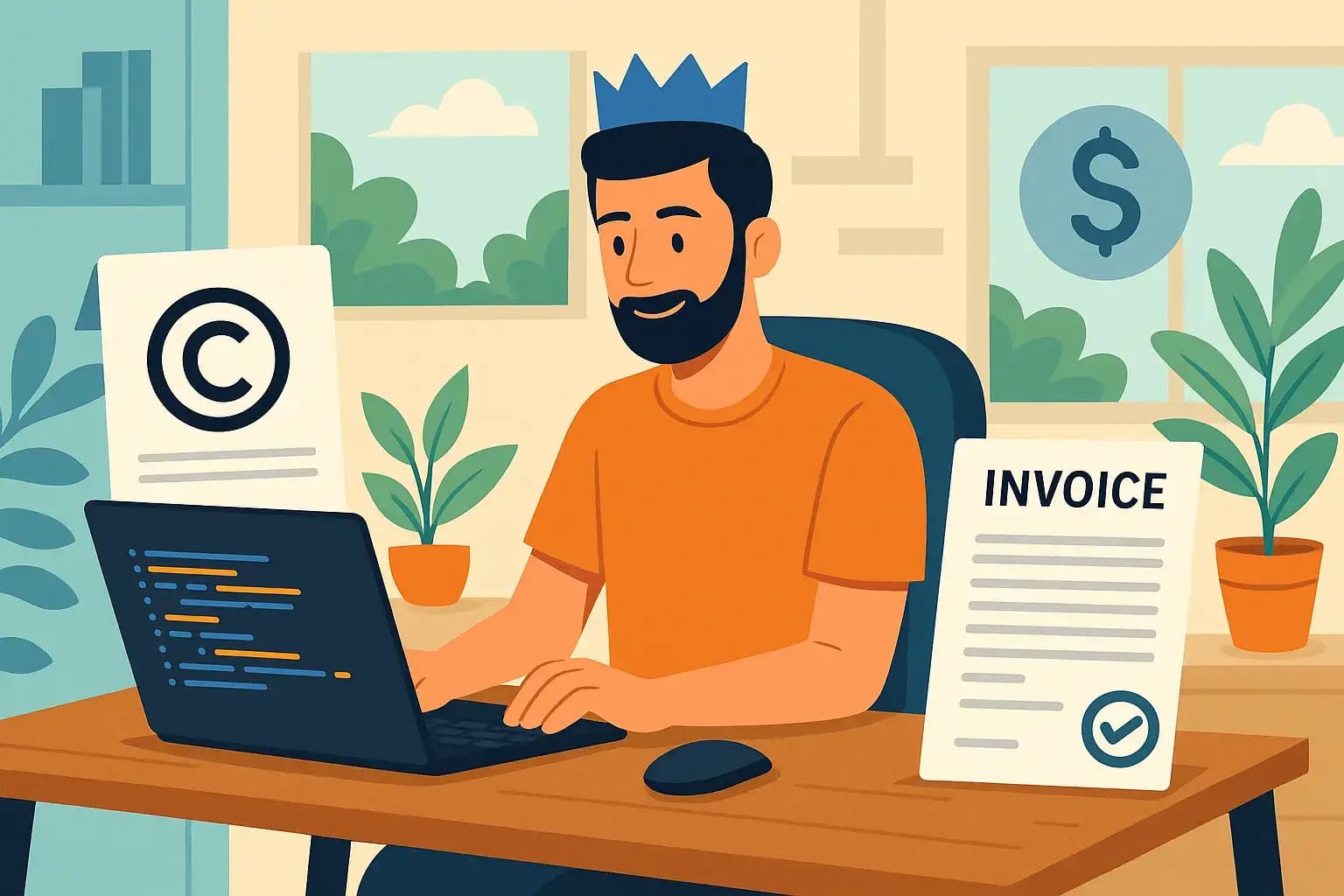
We're all for helping devs protect their work. You might wanna consider copyrighting your code to yourself.
This guide explains how to make sure that if someone tries to underpay you, ghost you, or file a chargeback, you have full proof that you worked on it as a service and that it was delivered.
1. Copyright your code the right way
When you write original code and save it in a fixed form, it’s protected by copyright law in most countries. That means you automatically hold the rights to reproduce, distribute, and modify it.
However, if you're working under a contract or as an employee, the company may own the rights. Always read your agreement.
What to do:
- Add a copyright notice in your files (example: © 2025 Your Name. All rights reserved)
- Use Git or backups to timestamp your work
- Register your copyright if the work is public-facing or high value
If you didn’t sign anything that transfers ownership, the code is legally yours.
2. Use WakaTime to track your work
Install WakaTime in your editor. It runs silently in the background and logs:
- What files you worked on
- When you worked
- How long you worked
- Which projects you spent time on
Why this matters:
- It gives you timestamped proof of work
- It creates a visible timeline
- You can export a PDF and attach it to your invoice
If a client says they didn’t receive anything, WakaTime shows exactly what you did and when.
3. Only work inside their Git repo
Before you start, make sure the client invites you to their Git repository.
Why it matters:
- Git logs are permanent and timestamped
- Commits show what you changed and when
- It proves that you delivered the work into their project
No Git access means no technical proof. If they claim you never touched the project, you’ll have nothing to defend yourself.
4. Write and send your own invoice
Don’t let the client create the invoice. You are providing a service, so you send it.
Include:
- Scope of what you built
- Date range or delivery deadline
- Total payment amount
- Attached WakaTime report PDF for proof
- Optional links to Git commits for added transparency
This makes it clear that work was done, time was tracked, and delivery happened.
5. Be ready if someone tries to chargeback
Chargebacks happen. A client can dispute a payment through their bank and get their money back unless you can prove they received what they paid for.
What stops that?
- Git commit logs with your name and timestamps
- A WakaTime report that shows exactly when and where you worked
- An invoice that outlines the scope and timeline
- A written agreement showing the client accepted the service
These things together make it extremely hard for a client to claim fraud or non-delivery.
Final checklist
Before and during the job, make sure you:
- Get Git access and use it
- Turn on WakaTime in your editor
- Add copyright notices in your files
- Register copyright for major projects if needed
- Write and send your own invoice
- Attach WakaTime proof
- Put all agreements in writing
- Keep full backups of everything
Final thoughts
This is not about being paranoid. It’s about being professional.
If a client ever tries to take your money back or deny that you worked, your only defense is what you can prove. Your time, your code, and your process need to be documented.
Protect your work. Track your time. Own your value.
Because once the client files that chargeback, you either have receipts or you don’t.
Find Your Next Server
Looking for a new RSPS to play? Browse our RSPS List to discover the best private servers, compare features, and find the perfect community for your playstyle.
More Articles You Might Enjoy
 RSPS
RSPSWhy RSPS PvP Scenes Always Shrink Over Time
RSPS PvP scenes often peak early and slowly decline. This article explains why PvP activity fades even on well designed servers.
January 13, 2026