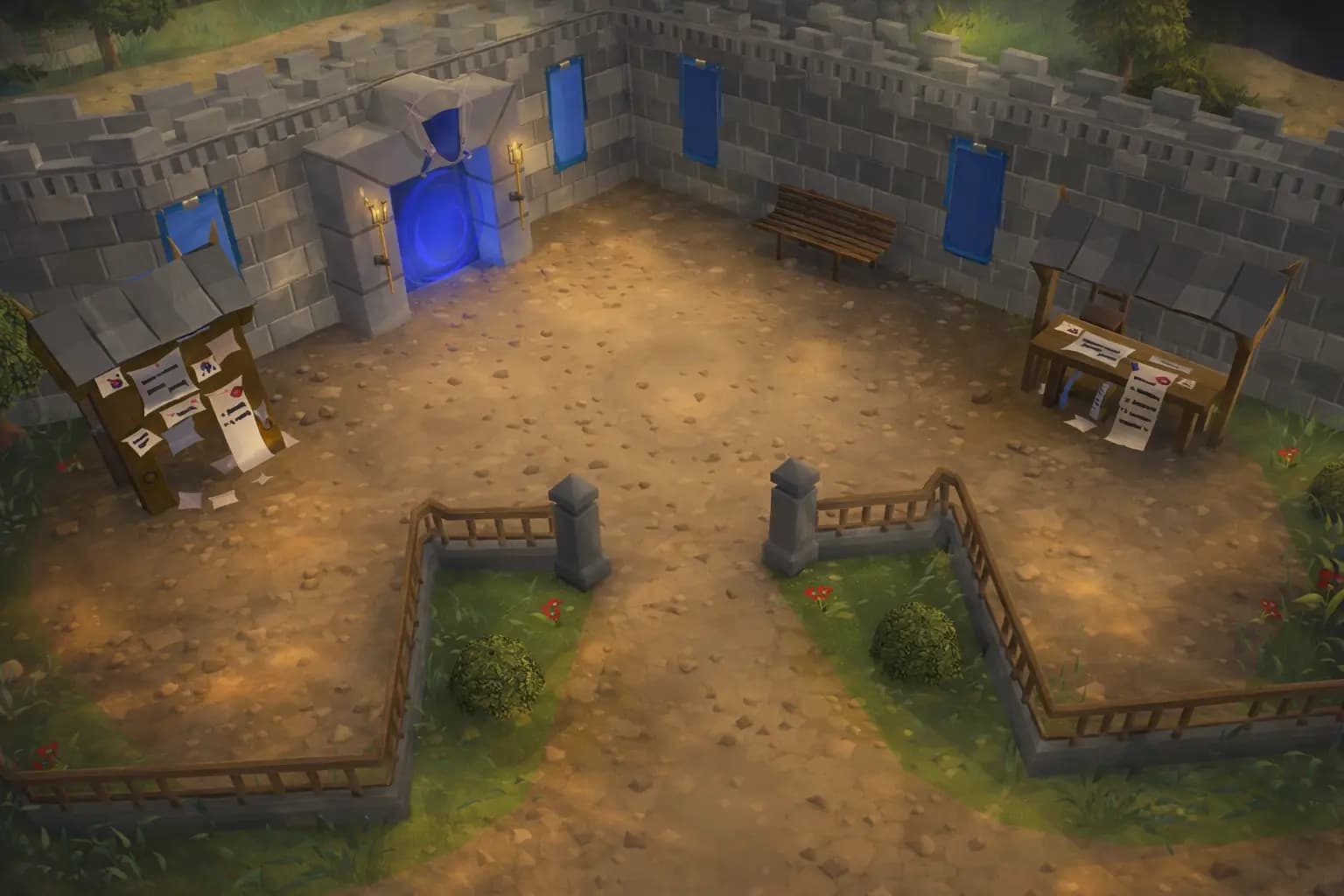
Why Client Version Fragmentation Hurts RSPS Server Stability
Players Interact With Servers Through Clients, Not Code
Every RSPS server exists behind a client.
Players do not experience your backend architecture.
They experience whatever client build they are running.
When multiple client versions connect at the same time, the server stops behaving as a single system.
It becomes fragmented.
This fragmentation is rarely visible at first.
But it quietly erodes stability, support quality, and player trust.
How Client Fragmentation Actually Happens in RSPS
Most RSPS servers do not intentionally support multiple client versions.
Fragmentation appears through small operational decisions.
Common causes include:
-
Manual client downloads shared through Discord
-
Old launcher caches not forcing updates
-
Hotfixes pushed server side without client sync
-
Optional updates players skip
-
Custom plugins compiled against older revisions
Within days, different players are effectively playing different games.
The server accepts them all.
The problems start after.
Silent Desync Between Client and Server Logic
Client and server logic drift quickly.
Interfaces render differently.
Packets are interpreted inconsistently.
Client side checks no longer match server expectations.
This creates issues that look random:
-
Buttons work for some players
-
Interfaces break only on certain accounts
-
Combat animations appear incorrect
-
Inventory actions fail intermittently
From the player side, the server feels buggy.
From the staff side, bugs cannot be reproduced.
This is one of the most damaging failure modes in RSPS.
Support Load Increases While Signal Quality Drops
Fragmentation destroys support efficiency.
Staff test issues using their own client build.
Players report issues using another.
Logs show nothing wrong.
Replays do not match reality.
The same ticket gets reopened repeatedly.
Players feel ignored.
Staff feel burned out.
Over time, support responses become defensive instead of helpful.
Trust drops without a single major incident.
Why Fragmentation Feels Like Server Instability to Players
Players do not distinguish between client and server.
If something breaks, the server is blamed.
Even if uptime is perfect.
Even if backend performance is solid.
Perceived quality is driven by consistency.
Fragmentation removes consistency.
Two players standing next to each other can experience different mechanics.
That destroys confidence faster than lag ever could.
Launchers Reduce Fragmentation Only If Enforced
Many servers believe having a launcher solves this.
It does not.
Not by default.
A launcher only helps if:
-
Updates are mandatory
-
Old builds are blocked
-
Cached versions are invalidated
-
Version checks happen before login
Optional updates are not protection.
They are an illusion of control.
Version Locking Is a Stability Feature, Not a Convenience
Serious RSPS servers treat client versioning as part of stability.
One active client version.
One supported protocol.
One expected behavior set.
Everything else is blocked.
This feels harsh.
But it prevents hundreds of edge cases later.
Players adapt quickly.
Chaos does not.
Fragmentation Compounds Over Time
Client fragmentation never fixes itself.
Each update increases the gap.
Each skipped version adds uncertainty.
Eventually, staff stop knowing which version is correct.
Players stop trusting updates.
Bug reports lose credibility.
At that point, the only fix is a forced reset of client distribution.
Which damages trust even more.
Stability Is Perceived Through Uniform Experience
RSPS servers survive on perceived reliability.
Uniform experience creates confidence.
Fragmentation destroys it silently.
Servers that feel stable usually are not more advanced.
They are more disciplined.
Client control is one of the clearest signals of that discipline.
And players notice it, even if they never name it.
Find Your Next Server
Looking for a new RSPS to play? Browse our RSPS List to discover the best private servers, compare features, and find the perfect community for your playstyle.
More Articles You Might Enjoy
 RSPS
RSPSHow RSPS Started: The Early Years That Shaped Everything
A deep look at the earliest RSPS era, how private servers first worked, why the scene exploded, and what the community lost as it evolved over time.
January 19, 2026