Why Edgeville Became RSPS’s Default Home Area
The home area is not a location, it is a promise
When a player logs into an RSPS for the first time, they are not judging your content list. They are judging whether the world feels usable. Home is the first proof that your server has an identity, a rhythm, and a plan. If home feels confusing, slow, or empty, the player assumes everything else will be the same.
Edgeville became the default home because it solves the first hour problem better than almost any other spot. It makes basic actions obvious. It reduces walking. It creates instant visibility. It forms social density without requiring complex systems. It feels like a hub even when the population is not huge.
That is the real reason it won. Not because it is perfect, but because it is forgiving.
Edgeville compresses the early game into one screen of decisions
Most home areas fail because they spread the first session across too much space. New players do not want a tour. They want certainty.
Edgeville compresses the core loop into a small radius:
Bank is close and easy to spot.
Combat areas are nearby.
Other players are naturally clustered.
Common travel routes are simple and repeatable.
This compression matters because it creates a reliable mental map. Players stop thinking about navigation and start thinking about goals. In RSPS, that shift is everything. The moment a player is goal-driven instead of orientation-driven, they become harder to lose.
It is the cleanest bank-centric layout in the classic map
In most RSPS designs, the bank is not just storage. It is the control panel for the entire experience.
A bank-centric home works best when:
The bank is visually central.
The path to it is unobstructed.
The area around it supports trading, flexing, and social presence.
There is enough open space for stalls, NPCs, and custom features.
Edgeville’s bank placement is one of the most practical in the classic world. It is easy to approach from multiple angles. It has open tiles around it. It supports crowding without becoming unreadable.
That might sound small, but it is one of the few places where high traffic does not automatically turn into chaos.
PvP proximity makes the world feel dangerous without forcing PvP
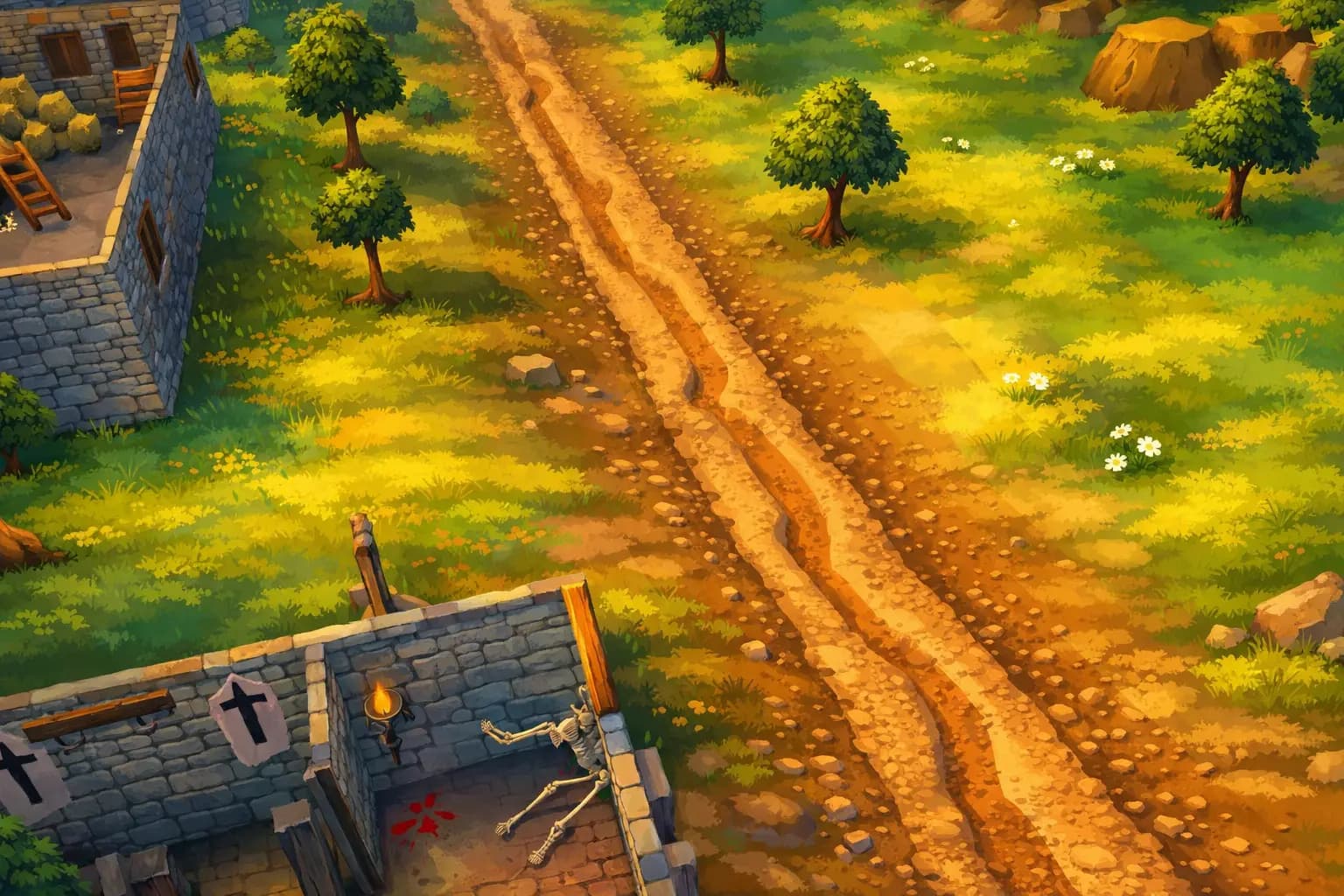
Edgeville sits close to the Wilderness, which creates a psychological effect that many RSPS owners want without realizing it.
The Wilderness has always been a symbol. Even players who do not PvP understand what it means. When the Wilderness is nearby, the world feels sharper. It feels like there are stakes somewhere.
Edgeville gives you that aura while still allowing safe behavior:
PvPers can move quickly into danger zones.
Non-PvPers can watch, trade, and spectate without committing.
The server gets a constant stream of movement that makes the hub feel alive.
That balance is hard to recreate elsewhere. If home is too safe, it can feel like a lobby. If home is too PvP heavy, it scares away casual players. Edgeville sits on the edge of both identities, which is exactly why it works.
It is the easiest place to manufacture population density
RSPS servers live and die on the perception of activity.
A server with 80 players can feel crowded or dead depending on how those players are distributed. Home design is basically population design. Edgeville naturally creates density because the useful tiles are close together.
This has a compounding effect:
Players see other players quickly.
Players assume the server is active.
Players stay longer because it feels social.
More players remain online, making the hub look even better.
Many servers accidentally do the opposite by choosing a large custom home where players spread out. The population is the same, but the social signal is weaker.
Edgeville is small enough to amplify the signal.
It supports the “show off” economy without extra systems
A lot of RSPS culture is visual.
Players want to show gear, rares, capes, pets, and flex items. They want an audience. They want people to recognize status without reading a wiki.
Edgeville works as a flex zone because:
The bank area is a natural gathering point.
Players idle there between activities.
The camera angles and open space make gear visible.
The environment is familiar, so items stand out more.
This is one reason Edgeville is still popular even in servers that are not PvP focused. It supports the social economy of attention.
It matches how most RSPS servers are structured behind the scenes
Many RSPS projects grow from older bases and frameworks where Edgeville already exists as a well-defined region with known coordinates, clipping, and object placement.
That matters more than people admit.
Choosing Edgeville reduces technical risk:
Less custom mapping work.
Fewer pathing surprises.
Fewer weird camera or object issues.
Less time spent debugging home-related problems.
A home area is touched by everything: teleports, spawns, NPC interactions, object clicks, and player routing. If your home is unstable, every update becomes stressful.
Edgeville is a low-risk default, and RSPS culture tends to favor what reduces risk.
The community trained players to expect Edgeville, and expectations are sticky
Once enough servers use the same home, it becomes a shared language.
Players arrive already knowing:
Where the bank is.
Where the Wilderness line is.
Where trading usually happens.
Where to stand to be seen.
Where teleports are often placed.
This removes friction instantly. And friction is the hidden killer of retention.
A custom home can be beautiful and still lose players if it forces them to learn new habits without giving a clear payoff. Edgeville wins because it requires almost no onboarding.
It is not just a map choice. It is a familiarity strategy.
Why servers still choose Edgeville even when it is not ideal
Edgeville is not perfect for every server type.
Skilling-heavy servers might prefer a more peaceful central hub.
PvM-first servers might want a home closer to boss portals.
Social sandbox servers might want a larger custom plaza.
Yet Edgeville keeps winning because it is the safest choice when you do not want your home area to become a project on its own. Many owners would rather spend time on content, economy, and stability instead of designing a hub from scratch.
Edgeville is the default because it is predictable, and predictability is valuable in an ecosystem where most projects do not survive long.
What Edgeville signals about a server before you even play it
Players read home choices as signals.
If a server uses Edgeville, many players assume:
The server is tradition-aligned.
PvP might matter.
The economy is likely trade-heavy.
The server is built on familiar foundations.
Those assumptions can be right or wrong, but they influence behavior. A home area shapes what people expect, and expectations shape how they judge everything.
This is why some modern servers deliberately move away from Edgeville. They want to break the automatic assumptions and rebuild identity around a different hub.
But for most servers, the benefit of instant familiarity outweighs the cost of being predictable.
Edgeville became the default because it solves the retention math
Edgeville does three things extremely well:
It reduces confusion.
It increases social density.
It creates fast routes to meaningful gameplay.
That combination is basically retention math. Players stay when the world feels usable, alive, and immediate.
Edgeville delivers that with minimal effort, minimal risk, and maximum familiarity. That is why it remains the most common choice of home in RSPS, even after years of custom maps, new frameworks, and changing player culture.
Find Your Next Server
Looking for a new RSPS to play? Browse our RSPS List to discover the best private servers, compare features, and find the perfect community for your playstyle.
More Articles You Might Enjoy
 RSPS
RSPSWhy Some RSPS Servers Explode Overnight Then Vanish
Some RSPS servers gain massive attention overnight but disappear just as fast. This article explains the causes behind sudden growth and rapid collapse.
December 29, 2025