How Much Are RuneScape Rares Worth in Real Life?
Why people assign real cash value to rares
RuneScape is one of the few game ecosystems where “old pixels” can become status objects with a real money shadow price. That price is not official, not stable, and not endorsed by the game. It exists anyway, because players treat certain items as trophies, and trophies create a market.
The important detail is this: real world value does not come from the item’s combat strength. It comes from scarcity plus social meaning plus the belief that someone else will want it later. Rares become identity markers. They are the visible proof of “I was there”, “I earned this”, or “I can afford this”. When a community cares about those signals, value forms even if the developer never intended it.
RS3 rares and OSRS “rares” are not the same thing
A lot of confusion comes from mixing RS3 and OSRS.
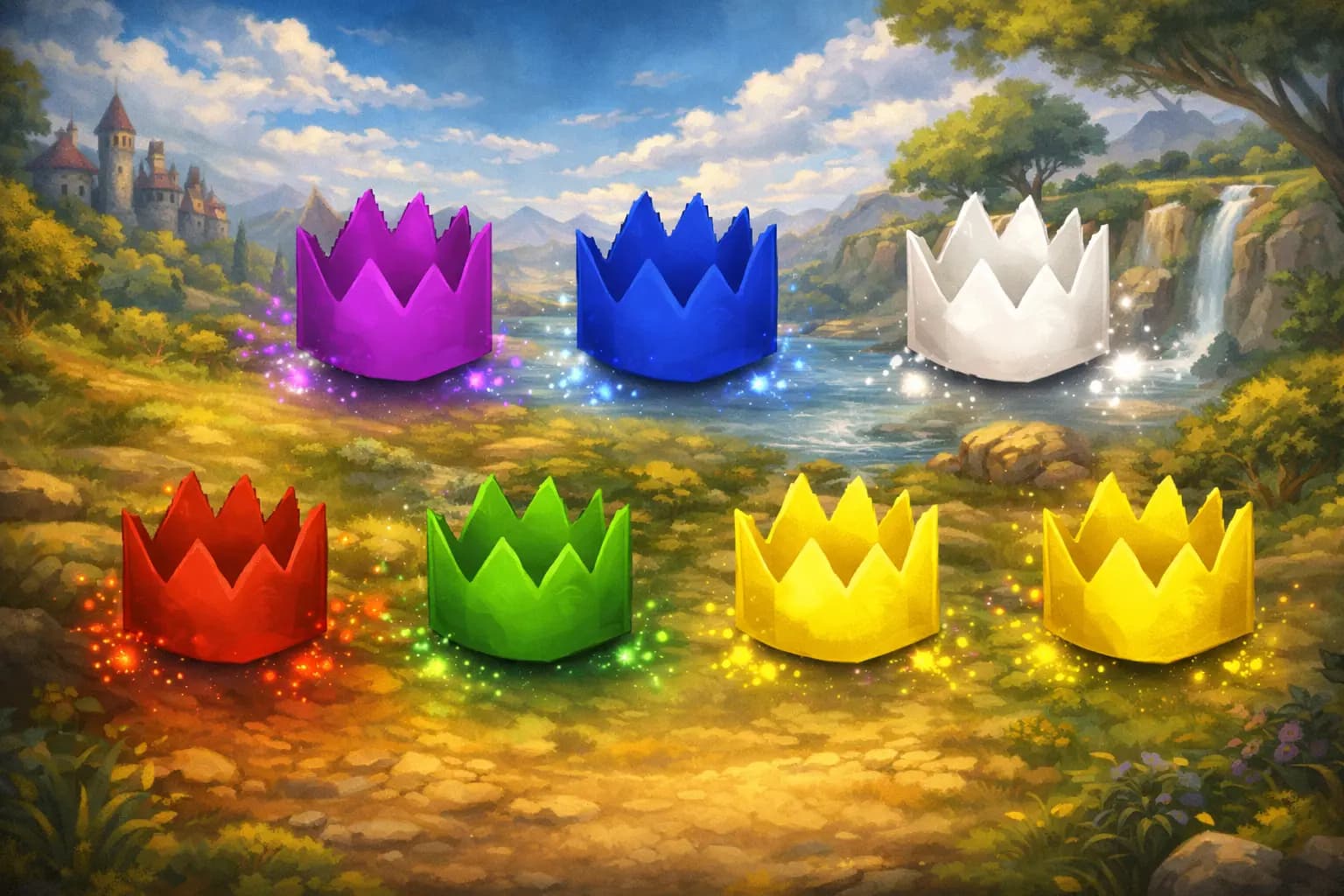
In RS3, discontinued holiday items (classic partyhats, Halloween masks, Santa hats, and a few other legacy collectibles) are the core of the rare economy. Their supply is effectively capped, so social demand does most of the pricing work. These items are not just expensive. They are cultural artifacts inside the game.
In OSRS, the most famous discontinued holiday rares do not function the same way. Instead, OSRS “rares” are usually items that are simply hard to obtain, limited by drop rates, content difficulty, or time. Think high-end gear, ultra rare cosmetics, or chase items tied to specific activities. They can still have real world shadow value, but the psychology is different: OSRS wealth often feels more like “liquidity” and progression power, while RS3 discontinued rares feel more like “collectible prestige”.
That distinction matters because it changes how stable the value feels. A discontinued collectible behaves differently than a difficult-to-farm weapon that can be rebalanced, power crept, or made easier to obtain later.
What actually moves the price of a rare
If you want to understand real world worth, ignore the item first and watch the forces around it.
Supply is not just total count. It is available count.
An item can be “rare” but still not expensive if many owners are willing to sell. Price spikes often happen when holders refuse to sell, not when the item suddenly becomes rarer.
Wealth concentration matters more than player count.
Rares are bought by the top slice of wealth. If the richest players get richer faster than everyone else, trophy prices can inflate even when the overall population is flat.
Social proof drives demand.
A single streamer flexing an item can create demand waves. The item did not change. The story around it changed.
Trust in the game’s future becomes part of the price.
If players feel the game is stable long term, they treat trophy items as safe status. If the community expects major rule changes, bans, or economic shocks, trophy demand gets cautious and prices wobble.
Duplication scandals and enforcement rumors distort everything.
Even the suspicion of dupes, rollbacks, or inconsistent enforcement can change pricing because buyers are pricing risk, not just the item.
So what are they worth, realistically
There is no single “worth”, because any real world number you see is usually based on unofficial, unverifiable trades, private deals, or listings that may not reflect final sale price. Still, it is possible to describe the reality without pretending the numbers are audited.
RS3 discontinued rares
In real world talk, the top-tier discontinued collectibles are often discussed in four-figure to five-figure territory for the most desirable variants and clean provenance, while lower-tier discontinued items may float in hundreds to low thousands depending on demand cycles. These ranges swing because trophy markets are emotional markets.
OSRS high-end items
OSRS “rares” are generally more tied to gameplay supply and demand, so real world shadow pricing tends to cluster lower than the most iconic RS3 discontinued trophies. Discussion often lands in tens to hundreds for many high-value items and can push higher for extreme edge cases, but it is usually less “collectible driven” and more “liquidity driven”.
Treat these as the shape of the market, not a price list. If someone claims a precise number with confidence, the first question is: “Prove the sale, prove the item, prove the timing.” Most cannot.
Why real world pricing is so hard to verify
Even honest participants struggle to verify value because the market has structural fog.
Private deals hide the real clearing price.
Big trades are often negotiated privately. Public claims can be exaggerated for flex, bargaining leverage, or reputation.
Listings are not sales.
A posted number is often an anchor, not evidence.
Bundles and swaps blur valuation.
Some deals include mixed items, services, or delayed delivery, which makes “price per item” fuzzy.
Risk pricing is invisible.
A buyer might pay less because they fear scams, bans, or chargebacks. That discount is real, but you never see it as a line item.
The rule problem: RWT risk changes the “real value”
Any real money value conversation has a hard ceiling: rules and enforcement. Real world trading is typically against game rules and can lead to account penalties. That fact alone reshapes the market.
If an item can be removed through enforcement, then part of what you are “paying for” is risk. That is why two identical items can have different shadow prices in conversation: the buyer is also buying perceived safety, account stability, and reputation of the counterparty.
In other words, the same rare can be “worth” different amounts depending on how risky the buyer believes the transaction is. That is not a collectible market. That is a risk market wearing a collectible mask.
Scams are not a side issue, they are the market tax
When people talk about real world worth, they often ignore the hidden cost: fraud.
Common failure modes are simple:
-
Impersonation and fake middlemen
-
Chargebacks and payment reversals
-
Stolen accounts and “dirty” items that later get reclaimed or flagged
-
Social engineering that turns a trade into a trap
This matters for valuation because a market with high fraud always has a built-in discount. The more scams the community expects, the more value leaks away from the item and into “who you know” and “who you trust”.
Why RSPS changes the rare conversation
In RSPS, “rares” can be engineered, duplicated through bugs, or reintroduced by staff decisions. That makes real world valuation even more unstable. A private server rare can be priceless on Monday and worthless on Friday if a reset, dupe, or staff shop change happens.
That is why the only stable “rare value” in RSPS is usually not the item itself. It is the server’s credibility. When credibility breaks, the rare market collapses first.
The most honest way to think about rare value
If you want a clean mental model, use this:
A RuneScape rare’s real world “worth” is the maximum someone will risk paying today for the social status of owning it, discounted by:
-
enforcement risk
-
scam risk
-
future supply risk
-
future relevance risk
-
community trust risk
That is why the numbers are dramatic, why they swing, and why they are so often argued about. People are not debating an item. They are debating risk, prestige, and belief in the world staying intact.
Find Your Next Server
Looking for a new RSPS to play? Browse our RSPS List to discover the best private servers, compare features, and find the perfect community for your playstyle.
More Articles You Might Enjoy
 RSPS
RSPSWhy RSPS PvP Scenes Always Shrink Over Time
RSPS PvP scenes often peak early and slowly decline. This article explains why PvP activity fades even on well designed servers.
January 13, 2026